
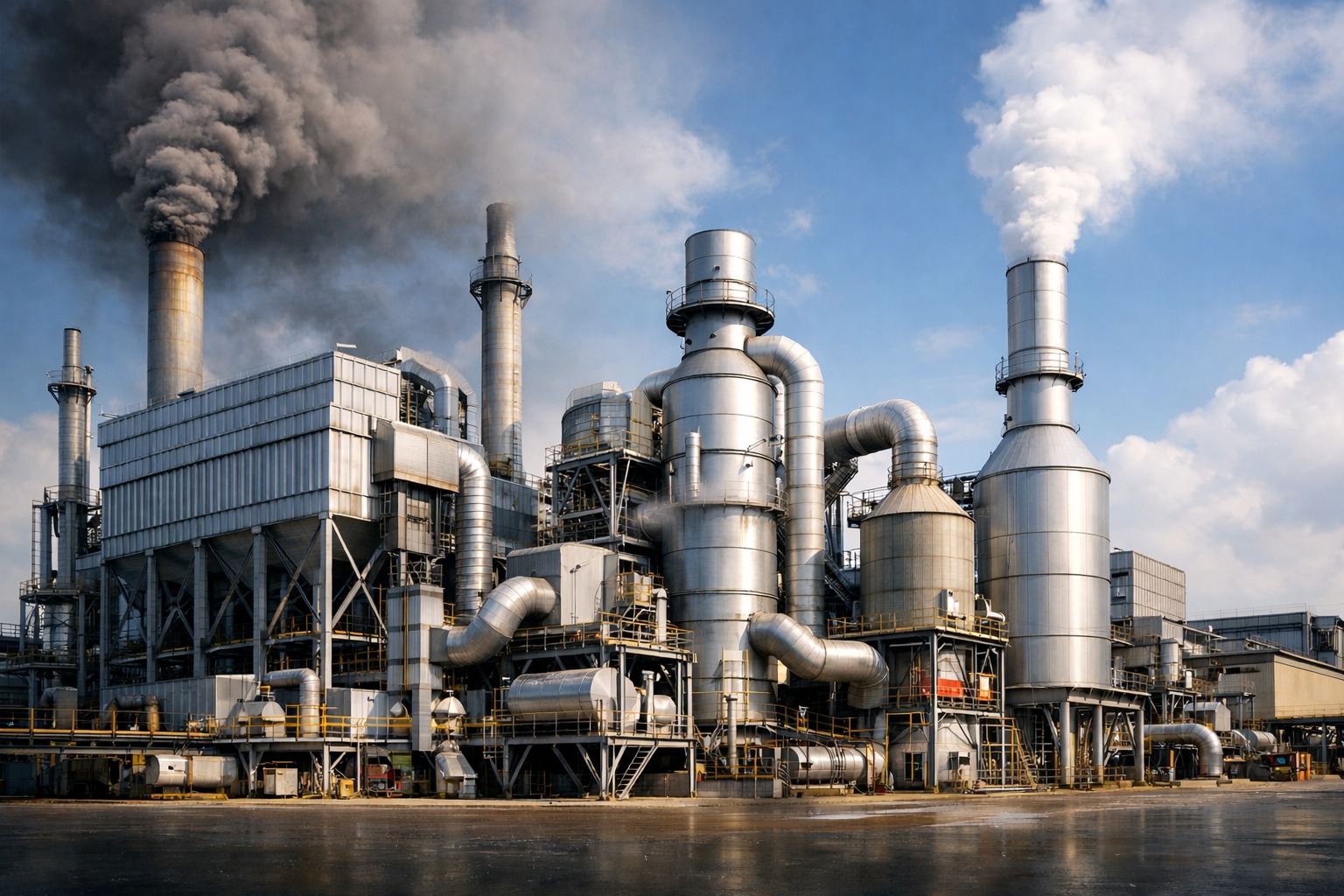
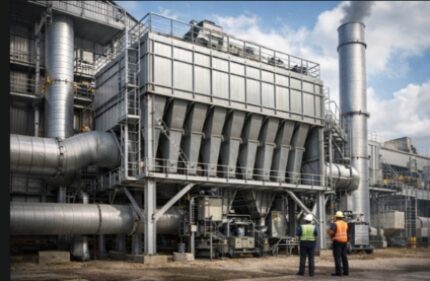
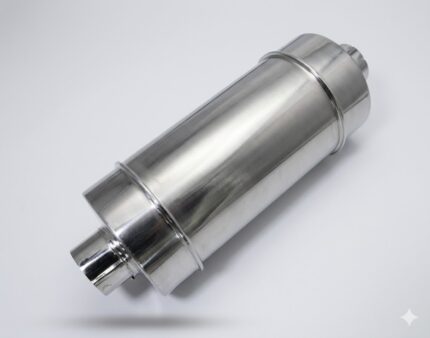
Industrial growth and manufacturing activities play an important role in economic development, but they also contribute significantly to air pollution. Industrial operations release dust particles, smoke, chemical fumes, toxic gases, volatile organic compounds (VOCs), and other harmful pollutants into the atmosphere. Without proper control systems, these emissions can negatively impact environmental quality, worker safety, and public health. To reduce industrial pollution and comply with environmental regulations, industries use advanced Air Emission Control Devices.
EO Energy provides Air Emission Control Devices designed to help industries control harmful emissions and maintain cleaner industrial operations. These systems are used across various sectors to reduce particulate matter, gaseous pollutants, smoke, and industrial fumes before they are released into the environment.
Air emission control technologies have become essential for industries that aim to improve environmental performance, maintain operational safety, and comply with pollution control standards.
What are Air Emission Control Devices?
Air Emission Control Devices are industrial systems designed to remove or reduce pollutants from exhaust gases generated during manufacturing and processing activities. These devices help industries control air contamination by capturing harmful particles, chemical vapors, smoke, and toxic gases before they enter the atmosphere.
Different types of air emission control systems are used depending on the nature of pollutants and industrial processes. Some systems are designed for particulate removal, while others are used for controlling gaseous emissions and chemical contaminants.
These devices help industries maintain cleaner emissions, improve workplace air quality, and support environmental sustainability.
Importance of Air Emission Control in Industries
Industrial emissions can create serious environmental and health concerns if not properly managed. Fine particulate matter, smoke, and harmful gases contribute to air pollution and may affect respiratory health for workers and nearby communities.
Government environmental authorities have established strict regulations to limit industrial emissions and maintain air quality standards. Industries are required to install suitable air emission control systems to comply with these regulations and reduce environmental impact.
Effective air emission control also improves workplace conditions by reducing airborne contaminants inside production facilities. Cleaner industrial environments support safer working conditions and better operational efficiency.
Industries that invest in pollution control technologies demonstrate environmental responsibility and contribute to sustainable industrial development.
Types of Air Emission Control Devices
EO Energy offers various Air Emission Control Devices suitable for different industrial applications and pollution control requirements.
Bag Filter Systems
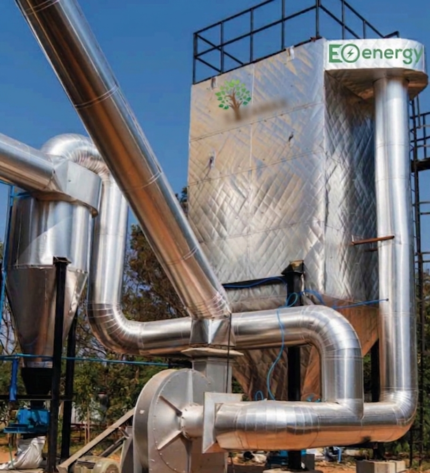
Bag Filter systems are widely used for controlling dry dust and particulate emissions. These systems use fabric filter bags to trap airborne particles while allowing clean air to pass through. Bag filters are commonly used in cement plants, steel industries, pharmaceutical units, and mining operations.
Electrostatic Precipitators (ESP)
Electrostatic Precipitators remove fine particulate matter from industrial exhaust gases using electrical charges. These systems are highly effective for controlling smoke, fly ash, and dust emissions generated in power plants, foundries, and heavy industrial operations.
Venturi Scrubbers
Venturi Scrubbers are wet air pollution control systems designed to capture fine dust particles and gaseous pollutants using liquid droplets. These systems are suitable for industries dealing with chemical fumes, smoke, and corrosive gases.
Thermal Oxidizers
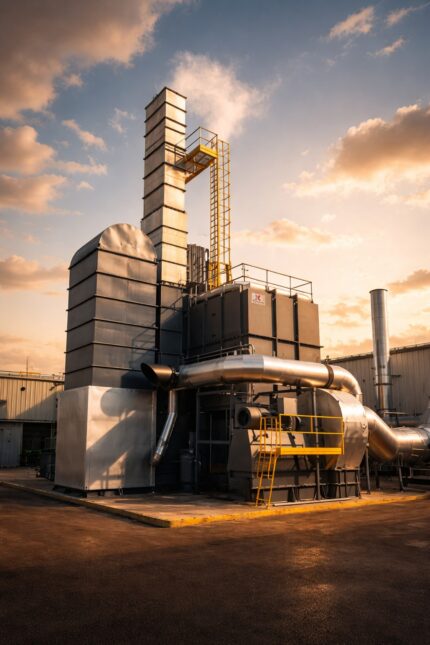
Thermal Oxidizers are used for destroying volatile organic compounds (VOCs), hazardous gases, and odor-causing pollutants through high-temperature combustion processes. These systems are commonly used in chemical, pharmaceutical, paint, and coating industries.
Cyclone Separators
Cyclone separators use centrifugal force to remove large dust particles from industrial airflow. These systems are often used as pre-cleaners before secondary filtration systems.
Wet Scrubber Systems
Wet scrubbers use liquid to capture pollutants from industrial exhaust gases. These systems are effective for controlling dust, chemical vapors, and gaseous emissions in different industrial applications.
Working Principle of Air Emission Control Devices
Air Emission Control Devices operate using different mechanisms depending on the type of pollutants being controlled. Some systems use filtration methods to capture particulate matter, while others use electrical charging, wet scrubbing, or thermal oxidation processes.
In filtration-based systems like bag filters, polluted air passes through filter media that traps dust particles. In electrostatic precipitators, airborne particles receive an electrical charge and are collected on charged plates.
Wet scrubbers and Venturi Scrubbers use liquid droplets to capture pollutants from industrial gases, while thermal oxidizers destroy harmful compounds through controlled combustion at high temperatures.
Each system is selected based on industrial process conditions, emission characteristics, and pollution control requirements.
Applications of Air Emission Control Devices
Air Emission Control Devices are used across multiple industries where air pollution management is essential. EO Energy provides systems suitable for various industrial sectors.
Power plants use emission control devices to reduce fly ash and smoke emissions generated during fuel combustion. Cement industries rely on these systems for dust control during material handling and production processes.
Chemical manufacturing units use air pollution control systems to manage chemical vapors, VOCs, and hazardous gases. Pharmaceutical industries also use these systems for controlling airborne particles and process emissions.
Steel plants, foundries, textile industries, food processing units, paper mills, fertilizer plants, mining industries, and automobile manufacturing facilities commonly use Air Emission Control Devices for industrial emission management.
Benefits of Air Emission Control Devices
One of the major benefits of Air Emission Control Devices is improved air quality. By reducing harmful emissions, these systems help industries maintain cleaner industrial operations and safer workplaces.
These devices also support environmental compliance by helping industries meet pollution control regulations related to particulate matter, VOCs, smoke, and gaseous emissions.
Another important advantage is operational efficiency. Cleaner industrial environments help reduce equipment contamination, improve machinery performance, and minimize maintenance issues caused by excessive dust and pollutants.
Air emission control systems also contribute to environmental sustainability by reducing the release of harmful pollutants into the atmosphere. Industries that implement advanced pollution control technologies strengthen their environmental management practices and support long-term industrial growth.
Features of EO Energy Air Emission Control Systems
EO Energy designs Air Emission Control Devices according to industrial requirements and operational conditions. The systems are manufactured using industrial-grade materials suitable for continuous operation and demanding industrial environments.
The company provides customized solutions based on airflow volume, pollutant type, emission levels, and process conditions. Each system is designed for reliable performance and effective emission control.
EO Energy focuses on delivering air pollution control systems that support cleaner industrial operations, stable performance, and long-term operational reliability.
The company also provides technical consultation and guidance for selecting suitable pollution control equipment for different industries and applications.
Why Choose EO Energy?
EO Energy offers industrial air pollution control solutions developed for efficient emission management and environmental compliance. The company provides Air Emission Control Devices suitable for controlling particulate matter, smoke, fumes, VOCs, and industrial gases.
The systems are customized according to industrial applications and pollution control requirements. EO Energy focuses on providing practical solutions that help industries maintain cleaner emissions and improve workplace air quality.
With industry-focused solutions and reliable support, EO Energy helps industries implement effective air emission management systems for sustainable industrial operations.
FAQs – Air Emission Control Devices
1. What are Air Emission Control Devices?
Air Emission Control Devices are industrial systems used to reduce or remove harmful pollutants such as dust, smoke, fumes, VOCs, and gases from industrial exhaust streams.
2. Why are Air Emission Control Devices important?
These systems help industries reduce air pollution, maintain environmental compliance, improve workplace safety, and support cleaner industrial operations.
3. Which industries use Air Emission Control Devices?
Industries such as power plants, cement manufacturing, steel plants, chemical industries, pharmaceutical units, textile industries, and food processing facilities commonly use these systems.
4. What types of pollutants can Air Emission Control Devices remove?
These systems can control dust particles, smoke, fly ash, chemical fumes, volatile organic compounds (VOCs), and hazardous gases.
5. Does EO Energy provide customized Air Emission Control Devices?
Yes, EO Energy offers customized Air Emission Control Devices based on industrial requirements, process conditions, and emission control needs.


 Total views : 24030
Reviews
There are no reviews yet.