
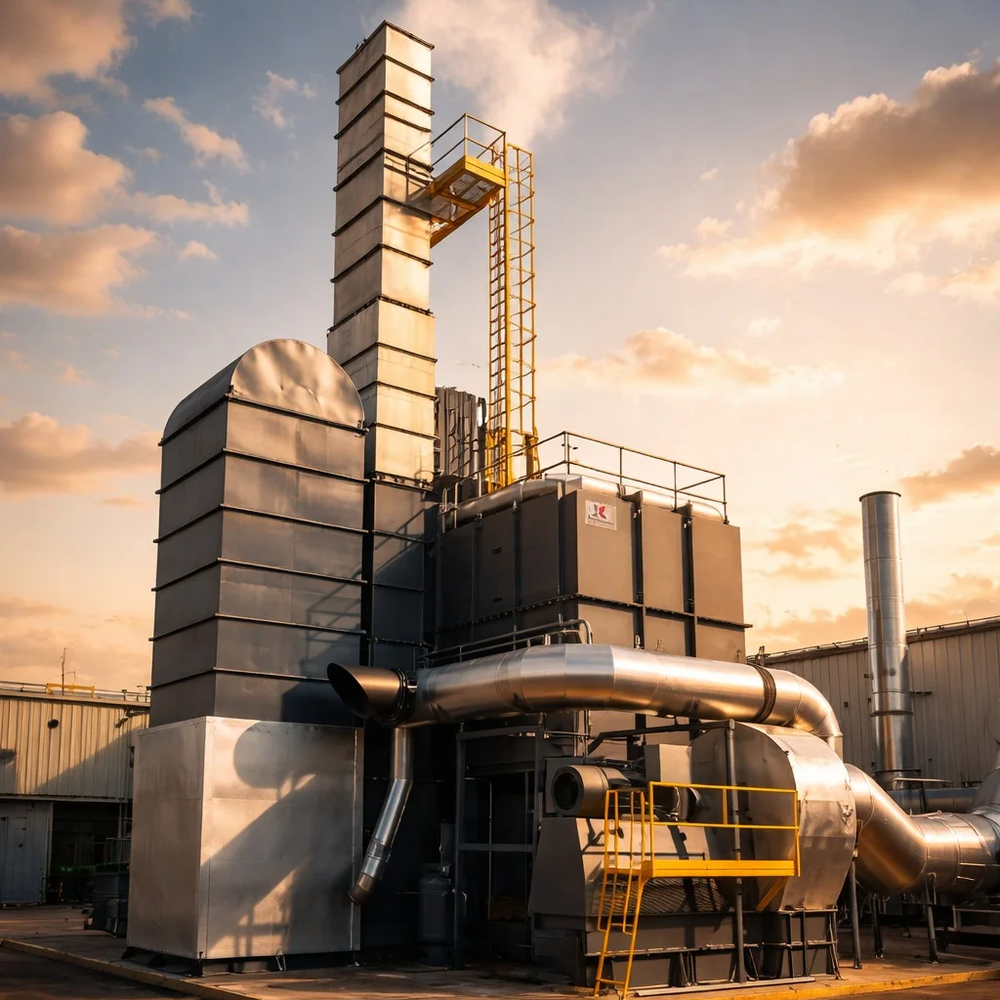
Thermal Oxidizer Air Pollution Control: Destroy Harmful Fumes and Odours at the Source
Many industrial processes release gases that are harmful or smell strong. Paints and coatings, solvents, printing inks, chemicals and many production steps give off volatile organic compounds, often called VOCs, which are hard to capture with filters or sprays. If these gases go straight out of the stack, they add to air pollution and can create odour problems for people nearby. The Thermal Oxidizer from EOEnergy Pvt. Ltd. is an air pollution control device designed to destroy these gases using heat, so the air leaving your plant is cleaner.
What Is a Thermal Oxidizer?
A thermal oxidizer is a piece of equipment that treats polluted gas by heating it to a high temperature in the presence of oxygen. At this temperature, many harmful compounds react with oxygen and break down. For example, many organic pollutants are converted mainly into carbon dioxide and water vapour. Instead of capturing the pollutant and leaving you with waste to handle, the oxidizer destroys it.
It is important to understand that a thermal oxidizer is designed mainly for gaseous pollutants such as VOCs and odours. It is not the first choice for removing dust, for which devices such as bag filters, electrostatic precipitators and scrubbers are usually used.
How Does It Work?
The process is straightforward. Polluted gas is drawn into the oxidizer by a fan. A burner heats the gas to the temperature needed for the pollutants to break down. The gas then stays inside a chamber for a set time, so the reaction has time to finish. The cleaned, hot gas then leaves the unit. In many designs, the hot gas passes through a heat exchanger or heat recovery section, where its heat is used to warm the incoming gas, which reduces the amount of fuel the burner needs. Temperature sensors and controls keep the unit working at the right conditions.
Depending on the design and the gas, the oxidizer may be a simple direct-fired unit, a unit with a heat exchanger to recover heat, a regenerative design that stores and reuses heat very efficiently, or a catalytic design that uses a catalyst to work at lower temperatures. Our team can help you understand which type suits your process.
Why Use a Thermal Oxidizer?
Thermal oxidizers are chosen when the pollutants are gases that are difficult to remove in other ways.
They destroy pollutants rather than moving them from one place to another. They can treat strong odours that filters and scrubbers may not remove. They can handle a mix of different organic compounds in the same gas stream. They can often recover heat, which lowers running costs and, in some cases, allows heat to be reused elsewhere in the plant. And they can be designed for a wide range of gas flows and concentrations.
Whether a thermal oxidizer is the right choice depends on your gas, so our team can help you compare it with other options, such as scrubbers and filters.
Key Benefits
Destroys pollutants: Breaks down harmful gases and odours instead of just collecting them.
Handles odours and VOCs: Suited to fumes from coating, printing, chemical and similar processes.
Heat recovery: Can reduce fuel use by recovering heat, depending on the design.
Controlled and steady operation: Temperature controls keep the unit working as required.
Flexible fuel options: Can be built for the fuel available at your site, depending on the design.
Designed with safety in mind: Can include flame monitoring and temperature protection, depending on the design.
Custom built: Sized and designed to match your gas flow and pollutants.
Where Can It Be Used?
Thermal oxidizers are used in many industries, including paints, coatings and printing, chemicals and pharmaceuticals, plastics, rubber and resin production, adhesives and laminating, food processing and oil refining, wood and furniture finishing, textile and dyeing units, waste and wastewater treatment, and any process where the exhaust carries solvent vapours or strong odours. Any plant that needs to treat organic fumes or odours can consider one.
Things to Keep in Mind
A thermal oxidizer uses fuel to reach and hold its working temperature, so fuel cost is part of the picture. Heat recovery can reduce this cost a lot, especially when the gas contains enough combustible material to help sustain the process. Because the unit works at high temperature and deals with flammable vapours, safety design is important. The concentration of flammable vapour in the gas must be kept within safe limits, and the system needs suitable controls and protection. If the gas contains other substances, such as chlorine or sulphur compounds, the design and the need for further cleaning of the exit gas must be considered. We can guide you on all of these points when selecting the oxidizer.
Oxidizer and Monitoring Together
Controlling emissions and measuring them work best together. After an oxidizer is installed, our Continuous Emission Monitoring Station can measure what leaves the stack, showing whether the oxidizer is doing its job and helping you keep records. If you also want to track the air around your site, our Continuous Ambient Air Quality Monitoring Station and Portable Air Quality Monitoring System can help. For dust and particles, our Bag Filter, Electrostatic Precipitator and Venturi Scrubber may suit your process better.
Choosing the Right Thermal Oxidizer
The right design depends on your process. Please keep these details ready: the type of plant and process, the gas flow and temperature, the pollutants and their concentration, any rules or limits that apply to your plant, the fuel and power available, and the space for installation. Our team can guide you on the right design, size and materials.
Installation and Maintenance
For safe and reliable performance, the oxidizer should be installed and connected to the gas duct, fuel supply and stack according to the manufacturer’s guidance and applicable safety rules. Regular checks help keep it working well. The burner, flame detection, temperature sensors and safety controls should be inspected, the fan and ductwork checked, and the heat recovery section cleaned and inspected as needed. Our team can guide you on installation, and support is available for servicing and operating questions afterwards.
Why Choose EOEnergy?
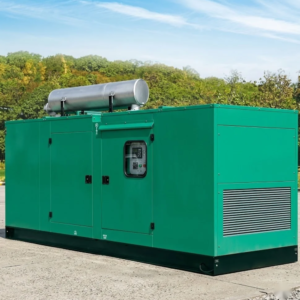
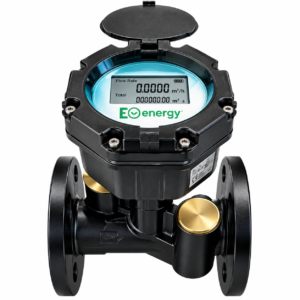
EOEnergy Pvt. Ltd. is a manufacturer and supplier of power solution and environmental equipment, including generators, retrofit emission control devices and dual fuel kits, along with a range of air pollution control devices, flowmeters and monitoring systems. This lets us support your emission control and monitoring needs from one source.
Frequently Asked Questions
1. What is a thermal oxidizer?
It is an air pollution control device that heats polluted gas to a high temperature so that harmful compounds, such as VOCs and odour-causing gases, break down into simpler substances.
2. What pollutants can it treat?
It is mainly used for volatile organic compounds, odours and certain other organic gases. It is not the usual choice for removing dust.
3. Does it use fuel?
Yes. A burner heats the gas to the working temperature. Heat recovery can reduce fuel use, depending on the design and the gas.
4. What are the different types?
Common types include direct-fired, recuperative, regenerative and catalytic designs. The best choice depends on your gas flow, pollutant concentration and running cost, so our team can guide you.
5. How can I check that it is working?
Emission readings from the stack show how well the oxidizer is performing. Our Continuous Emission Monitoring Station can provide this data.


 Total views : 1588
Reviews
There are no reviews yet.