

By EO Energy
Air pollution has become a serious concern for industries, governments, and urban populations. With increasing industrial activities, vehicular emissions, and construction work, monitoring air quality is no longer optional, it is essential. Accurate pollution tracking helps organizations make informed decisions, comply with environmental regulations, and contribute to healthier surroundings.
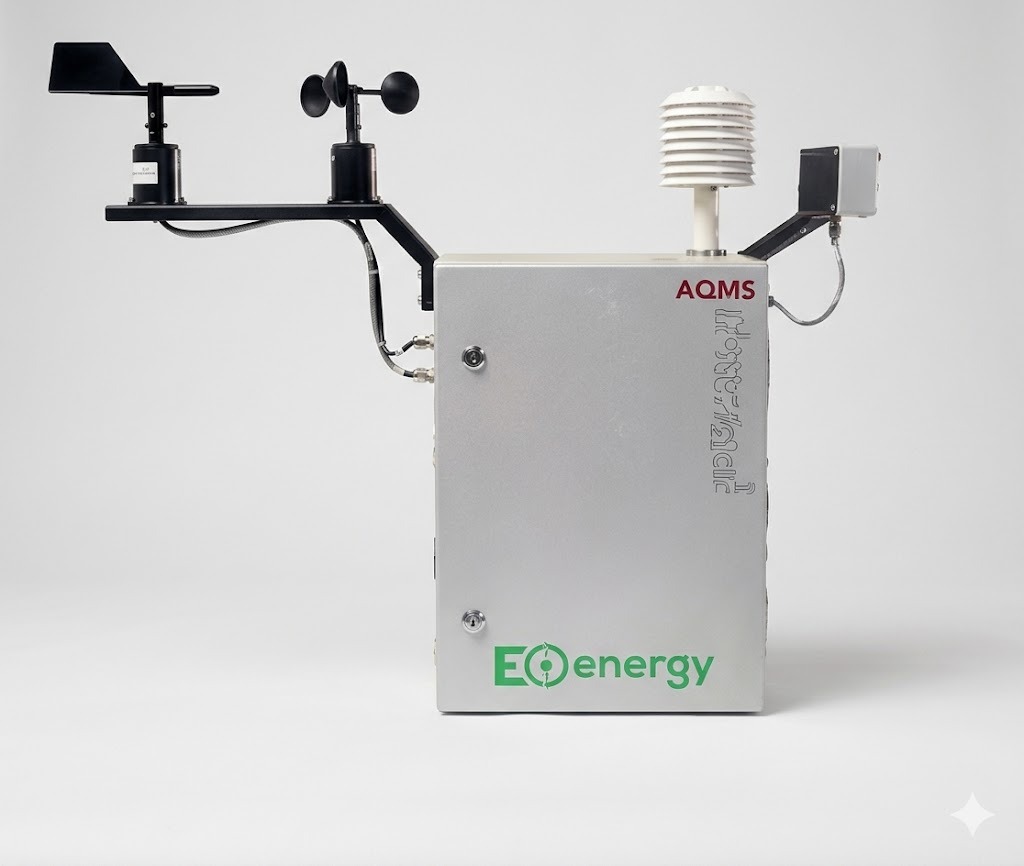
An Ambient Air Quality Monitoring System plays a crucial role in measuring and analyzing air pollution levels in real time. From industrial zones to smart cities, these systems provide valuable data that supports environmental management. In this blog, we will explore how to choose the right monitoring system and why EO Energy’s solutions are trusted for reliable performance.
Understanding Ambient Air Quality Monitoring Systems
An Ambient Air Quality Monitoring System is designed to measure pollutants present in outdoor air. These systems track parameters such as particulate matter (PM2.5 and PM10), sulfur dioxide (SO₂), nitrogen oxides (NOx), carbon monoxide (CO), and ozone (O₃).
The data collected helps authorities and industries understand pollution trends and take corrective actions. These systems are widely used in industrial areas, urban zones, highways, and construction sites to ensure environmental safety.
Unlike manual testing methods, modern monitoring systems provide continuous and automated data, making them more efficient and accurate.
Importance of Accurate Pollution Monitoring
Accurate air quality monitoring is essential for several reasons. First, it helps organizations comply with environmental norms and avoid penalties. Regulatory authorities often require industries to maintain specific pollution levels, and monitoring systems ensure these limits are not exceeded.
Second, it protects public health. Poor air quality can lead to respiratory issues, cardiovascular diseases, and other health problems. Monitoring systems help identify pollution sources and reduce exposure risks.
Third, it supports sustainable development. By tracking emissions and air quality, industries can adopt cleaner technologies and reduce their environmental impact.
Types of Air Quality Monitoring Systems
Different environments require different types of monitoring solutions. Understanding these options helps in selecting the right system for your needs.
A Continuous Ambient Air Quality Monitoring Station is a fixed installation used for long-term monitoring. It provides real-time data and is commonly used by government agencies and large industries. These stations are ideal for tracking pollution trends over time and ensuring regulatory compliance.
A Portable Air Quality Monitoring System is designed for mobility and flexibility. It can be used in multiple locations, making it suitable for temporary monitoring, site inspections, and environmental assessments.
For enclosed spaces, an Indoor Air Quality Monitor is essential. It measures pollutants inside buildings, ensuring a safe and healthy environment for occupants. These monitors are widely used in offices, hospitals, schools, and commercial spaces.
Key Factors to Consider When Choosing a Monitoring System
Selecting the right Ambient Air Quality Monitoring System requires careful evaluation of several factors. The first aspect to consider is the type of pollutants you need to monitor. Different systems are designed to measure specific parameters, so it is important to choose one that matches your requirements.
Accuracy and reliability are also critical. A high-quality monitoring system should provide precise data with minimal deviation. EO Energy’s systems are designed with advanced sensors to ensure consistent and dependable results.
Another important factor is real-time data availability. Modern systems offer continuous monitoring and remote access, allowing users to track air quality from anywhere. This feature is particularly useful for industries and regulatory authorities.
Ease of installation and maintenance should also be considered. A well-designed system should integrate seamlessly into your existing setup and require minimal upkeep.
Finally, compliance with environmental standards is essential. The system should meet regulatory requirements and provide data in a format suitable for reporting and analysis.
Role of Technology in Modern Monitoring Systems
Technological advancements have significantly improved the efficiency of air quality monitoring systems. Today’s systems are equipped with smart sensors, data logging capabilities, and cloud connectivity.
Real-time data transmission allows users to monitor air quality remotely through dashboards and mobile applications. This enables quick decision-making and immediate action in case of high pollution levels.
Data analytics also plays a key role. By analyzing historical data, organizations can identify pollution patterns and implement effective control measures.
EO Energy integrates advanced technology into its solutions, ensuring accurate monitoring and user-friendly operation.
Benefits of Using EO Energy Monitoring Solutions
EO Energy offers a range of air quality monitoring systems designed to meet diverse industrial and environmental needs. Their solutions are known for reliability, accuracy, and long-term performance.
One of the key benefits is real-time monitoring, which provides instant insights into air quality levels. This helps organizations take timely action and maintain compliance.
Another advantage is customization. EO Energy understands that every project has unique requirements, and their systems can be tailored accordingly.
Durability and low maintenance are also important features. The systems are built to withstand harsh environmental conditions, ensuring consistent performance over time.
By choosing EO Energy, businesses can ensure efficient pollution monitoring while contributing to environmental sustainability.
Applications Across Industries
Air quality monitoring systems are used across various sectors. In industrial environments, they help track emissions and ensure compliance with pollution norms.
In urban areas, these systems support smart city initiatives by providing data for pollution control and planning. Construction sites also use monitoring systems to manage dust and particulate emissions.
Healthcare and commercial spaces rely on Indoor Air Quality Monitor systems to maintain safe indoor environments. Educational institutions use these systems to ensure a healthy atmosphere for students and staff.
Portable systems are widely used for environmental studies, inspections, and temporary monitoring projects.
Future of Air Quality Monitoring
The demand for advanced monitoring systems is expected to grow as environmental awareness increases. Governments and organizations are investing in technologies that provide accurate and real-time data.
The future of air quality monitoring lies in integration with smart city infrastructure, artificial intelligence, and predictive analytics. These advancements will enable more efficient pollution control and better decision-making.
EO Energy continues to innovate and develop solutions that meet evolving industry needs, ensuring reliable and efficient monitoring.
Conclusion
Choosing the right Ambient Air Quality Monitoring System is essential for accurate pollution monitoring and environmental compliance. With various options available, it is important to select a system that meets your specific requirements.
Whether it is a Continuous Ambient Air Quality Monitoring Station for long-term monitoring, a Portable Air Quality Monitoring System for flexible use, or an Indoor Air Quality Monitor for enclosed spaces, the right solution can make a significant difference.
EO Energy provides advanced monitoring systems that deliver accurate data, support regulatory compliance, and contribute to cleaner air. Investing in the right system is not just a regulatory requirement, it is a step toward a healthier and more sustainable future.
FAQs
1. What is an Ambient Air Quality Monitoring System?
It is a system used to measure pollutants in outdoor air, providing real-time data for pollution tracking and environmental management.
2. What is the difference between portable and continuous monitoring systems?
Portable systems are mobile and used for temporary monitoring, while continuous stations provide fixed, real-time data for long-term analysis.
3. Why is indoor air quality monitoring important?
Indoor monitoring ensures a safe environment by detecting pollutants inside buildings, reducing health risks for occupants.
4. How accurate are air quality monitoring systems?
Modern systems, like those from EO Energy, use advanced sensors to deliver highly accurate and reliable data.
5. Can these systems help in regulatory compliance?
Yes, they provide the necessary data to meet environmental standards and reporting requirements.
Contact Us
Looking for a reliable Ambient Air Quality Monitoring System for your project? EO Energy is here to assist you.
Whether you need a Portable Air Quality Monitoring System, an Indoor Air Quality Monitor, or a Continuous Ambient Air Quality Monitoring Station, our team can guide you in selecting the right solution based on your requirements. Get in touch with EO Energy today to learn more about our air quality monitoring solutions and take a step toward accurate pollution monitoring and cleaner air.