
A Dual Fuel Kit is a retrofit conversion system that allows a diesel generator to run simultaneously on both diesel and natural gas (PNG/CNG). It reduces diesel consumption by up to 70%, cuts operational costs by 35–45%, and significantly lowers harmful emissions, all without any change in power output. The kit can be installed on existing DG sets ranging from 40 kVA to 2500 kVA and is fully compliant with CPCB and NGT standards.
Introduction: The Generator Problem Most Businesses Are Ignoring
If your business runs on a diesel generator, you already know the pain: rising diesel prices, pollution compliance notices, and the constant pressure to cut operational costs without sacrificing power reliability.
What most generator owners don’t know is that there is a proven retrofit solution that solves all three problems at once: a Dual Fuel Kit for generators. Rather than replacing your entire genset, this technology converts it into a bi-fuel system that runs on a blend of natural gas and diesel, delivering the same output at a fraction of the cost.
EO Energy, one of India’s leading manufacturers and suppliers of dual fuel conversion systems, has been helping industries across Delhi NCR and beyond make this transition for over 11 years. In this guide, we break down exactly how the technology works, what it costs, what you gain, and whether it’s the right fit for your setup.
What is a Dual Fuel Kit and How Does It Work?
At its core, a dual fuel system is about simultaneous combustion. The kit doesn’t replace your diesel engine — it upgrades how your engine burns fuel. During operation, methane-based gas (usually piped natural gas or CNG) is introduced into the combustion air stream alongside a reduced volume of diesel. The diesel still acts as the ignition source, but the gas now carries the bulk of the combustion load.
Here’s how the process flows in practice:
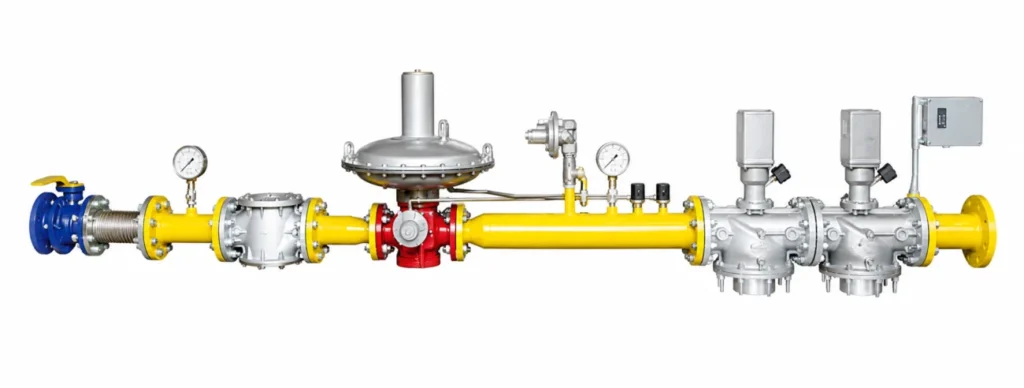
Gas is sourced from a piped gas (PNG) supply or local gas storage and fed through a gas train, a controlled assembly that filters the gas, regulates its pressure, and delivers it to the engine at slightly negative pressure. From there, it enters an air-gas mixer (AGM) installed between the air filter and the turbocharger. This mixer blends the incoming air and gas into a precise, homogeneous mixture before it enters the combustion cylinders. The diesel injectors then ignite this mixture, and combustion proceeds normally — just with significantly less diesel.
When gas supply is unavailable or interrupted, the system automatically reverts to 100% diesel operation. There is no hybrid-only mode and no risk of the engine stalling due to fuel switching. This fallback safety is one of the key reasons dual-fuel technology has gained strong acceptance in critical power backup applications.
The Key Components Inside a Dual Fuel Conversion Kit
Understanding the hardware gives you confidence in the upgrade. EO Energy’s dual fuel kit consists of two primary sub-systems:
1. The Air-Gas Mixer (AGM) This component sits between the air filter and the turbocharger. Its job is to deliver a highly consistent air-to-fuel ratio (AFR) across the engine’s entire speed and load range. A poor mixture here directly affects combustion efficiency, so the AGM is engineered to blend gases homogeneously, even under fluctuating load conditions.
2. The Gas Train Think of this as the control system for your gas supply. It accepts natural gas at low, stable pressure and conditions it before delivery to the AGM. The gas train includes the following:
- A Gas Filter to remove particulates
- A Zero Pressure Regulator to ensure stable delivery pressure
- A DMV Double Solenoid for safety shutoff
- Isolating Ball Valves for manual control
- A Main Adjustment Screw to calibrate the fuel blend ratio
Together, these components ensure consistent, safe, and precise dual fuel combustion. EO Energy’s kits carry an IP54 rating and are built with corrosion-resistant MS and SS316 stainless steel, making them suitable for demanding industrial environments.
Real-World Benefits of Installing a Dual Fuel Kit
Significant Reduction in Operating Costs
This is where the numbers speak clearly. With a dual fuel system in place, diesel consumption drops substantially because natural gas — which is priced lower than diesel on a per-unit energy basis — handles the primary combustion load. EO Energy’s kits are designed to deliver 35–45% savings in operational fuel costs per hour of use, with a return on investment typically achieved within 1 to 3 years.
For industries running generators 8 to 16 hours a day, this is not a marginal gain. It is a substantial reduction in one of the highest recurring costs in their energy budget.
Emissions Compliance Without Replacing the Genset
In several major cities and non-attainment zones across India, diesel generators have faced bans and restrictions under NGT orders. The National Green Tribunal’s order dated August 6, 2019, specifically references the conversion of diesel gensets to partial gas-based operation as a compliance pathway. State bodies, including the Haryana and Tamil Nadu Pollution Control Boards, have issued similar directives.
By installing a CPCB-approved dual-fuel kit, your genset can be brought back into full legal compliance and can then run the entire year without the risk of regulatory action during DG ban periods. EO Energy’s kits are designed in strict alignment with CPCB and NGT norms, giving operators both environmental and legal cover.
No Loss in Power Output
A common concern before installing any conversion kit is whether the engine will perform differently. In a properly engineered dual fuel system, the answer is no. The thermal energy delivered by the gas-diesel mixture is calibrated to match what the diesel engine would produce on its own. Power output remains constant, and the engine management system continues to function normally. This makes the transition seamless for operations that cannot afford any variation in backup power reliability.
Reduced Engine Wear Over Time
Natural gas burns more cleanly than diesel. Over time, this translates to less carbon buildup in the combustion chambers, fewer particulates depositing on engine components, and a measurable reduction in maintenance frequency. For operators running large gensets, especially in the 500 kVA to 2000 kVA range, this longer service life means another financial bonus.
Who Should Consider a Dual Fuel Kit?
This technology is particularly well-suited for:
Industries with high generator runtime such as factories, hospitals, data centers, and large commercial buildings that run diesel generators for extended hours every day stand to gain the most from per-hour fuel savings.
Businesses in NGT non-attainment cities: If your facility is located in a city that has been flagged for air quality violations, a dual fuel conversion is often the quickest and most cost-effective path to regulatory compliance.
With organizations focused on lowering their carbon footprint, many companies are conducting audits of their diesel consumption in response to ESG commitments and internal sustainability goals. A dual fuel kit offers a verifiable reduction in CO₂, NOx, and particulate emissions without replacing capital equipment.
EO Energy’s kits support DG sets from 40 kVA to 2500 kVA, covering nearly every industrial and commercial generator in use today.
A Comparison at a Glance
| Factor | 100% Diesel Operation | Dual-Fuel Operation |
| Fuel Cost per Hour | High | 35–45% lower |
| Diesel Consumption | Full | Reduced by up to 70% |
| Emissions (CO₂, NOx) | High | Significantly reduced |
| Power Output | Baseline | No change |
| NGT/CPCB Compliance | At risk in ban zones | Fully compliant |
| Engine Wear | Standard | Reduced over time |
| Capital Expenditure | Full genset cost | Retrofit only |
Why EO Energy’s Dual Fuel Kit Stands Apart
EO Energy is not a reseller — they are a manufacturer. Every kit is built, tested, and installed by their in-house engineering team, with over 11 years of field experience across Delhi NCR and pan-India deployments. Their solution comes with a parts and components warranty, annual maintenance support, and complete turnkey installation.
The kits are CPCB-approved and made in India for the reality of industrial power applications—load fluctuations, temperature extremes, and the occasional interruption in gas supply that switches the engine back to diesel automatically.
For businesses that don’t want to navigate the complexity of procurement, compliance, and installation separately, EO Energy offers end-to-end supply, installation, and AMC under one roof.
FAQs
1. What is a dual fuel kit and how does it reduce diesel consumption?
A dual fuel kit is a retrofit system that allows a diesel generator to combust a blend of natural gas and diesel simultaneously. The gas handles the primary energy load while diesel serves as the ignition source, reducing the total diesel burned per hour by up to 70%.
2. Will installing a dual fuel kit affect my generator’s power output?
No. A correctly engineered dual fuel system maintains the same power output as 100% diesel operation. The gas-diesel mixture is calibrated to deliver equivalent thermal energy to the combustion cylinders.
3. Is a dual fuel conversion kit legal and compliant in India?
Yes. EO Energy’s dual fuel kits are designed in compliance with CPCB and NGT guidelines. Installing a CPCB-approved dual fuel kit allows DG sets to operate legally in NGT-designated non-attainment cities where pure diesel generators face operational bans.
4. What size of generator can a dual fuel kit be installed on?
EO Energy’s dual fuel kits support diesel generators ranging from 40 kVA to 2500 kVA, making them suitable for small commercial setups all the way to large industrial power plants.
5. How long does it take to recover the investment in a dual fuel kit?
Based on typical operational patterns and the 35–45% reduction in hourly fuel costs, most installations achieve full return on investment within 1 to 3 years. Businesses with high daily generator runtime typically see payback at the lower end of that range.
Conclusion
One of the few upgrades you can make to a generator that will pay you back in terms of cost savings, emissions compliance, and operational continuity is a dual-fuel kit. And you don’t have to replace your existing equipment to do it. For Indian industries facing both the financial pressure of diesel prices and the regulatory pressure of pollution norms, it’s not just a good idea; it’s increasingly a business necessity.
EO Energy brings over a decade of manufacturing expertise, CPCB-approved products, and full installation support to make this transition straightforward. Whether you operate a 100 kVA backup generator at a commercial office or a 1500 kVA continuous power plant at an industrial facility, the dual fuel conversion path is proven, practical, and financially sound.
Ready to Upgrade Your Generator?
Get in touch with EO Energy’s team for a tailored quote based on your generator’s kVA rating, location, and gas availability.