

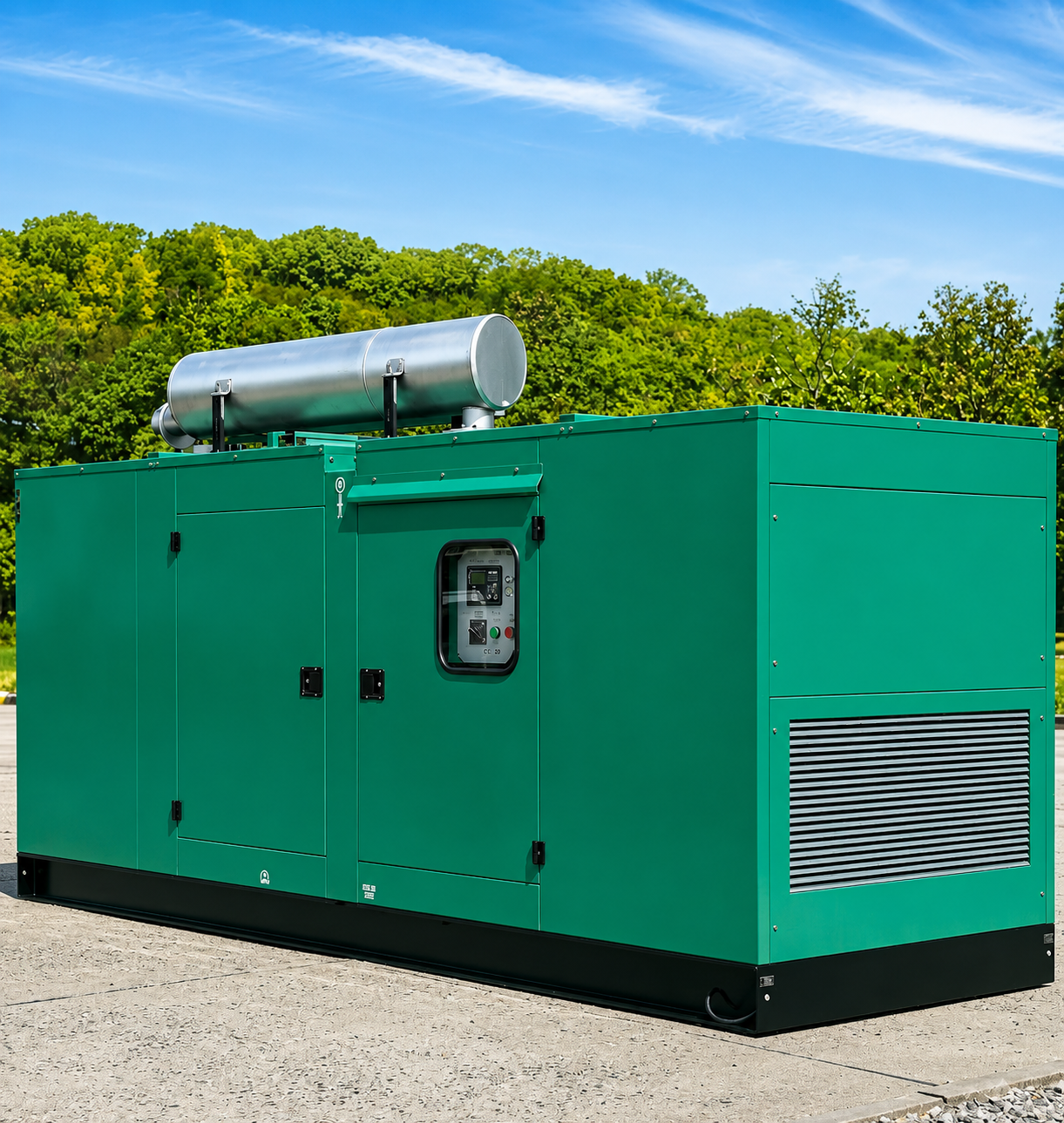
Power outages are not a minor inconvenience for industries and commercial establishments, they are operational emergencies. A single unplanned blackout can halt production lines, compromise data systems, disrupt cold storage, and cost businesses lakhs of rupees within hours. This is precisely why investing in the right generator solution is not optional for serious businesses, it is a strategic necessity.
At EO Energy, we have spent over 18 years building a reputation as one of India’s most trusted power solution providers. From manufacturing units in Noida to serving clients across 28 states, our deep expertise in diesel generator sets (DG sets) and power backup systems makes us uniquely positioned to help industries navigate the complexities of uninterrupted power supply.
Why Industrial and Commercial Facilities Cannot Afford Power Gaps
The modern industrial environment runs on precision timing. Whether it is a pharmaceutical facility maintaining temperature-sensitive storage, a data centre managing continuous uptime, a textile plant running multi-shift operations, or a commercial complex powering essential services, any disruption in power supply creates cascading failures.
India’s power infrastructure, while improving, still faces challenges in consistent supply across manufacturing zones, semi-urban commercial hubs, and growing industrial corridors. This is where a well-matched Generator steps in not as a luxury, but as a core pillar of business continuity planning.
Beyond just bridging outages, a high-quality generator also provides protection against voltage fluctuations that damage sensitive equipment, ensuring that your machinery and electronic systems stay protected round the clock.
Choosing the Right Generator: What Industries Must Know
Not every generator serves every purpose equally. Selecting the right DG set requires a clear understanding of your load requirements, fuel efficiency expectations, noise sensitivity, and compliance obligations.
Capacity Range Matters: EO Energy offers generator solutions ranging from 1 kVA portable units to heavy-duty 2000 kVA industrial sets. A small commercial office may need a compact 10–25 kVA standby unit, while a large manufacturing plant could require a 500 kVA or higher primary power source.
Fuel Efficiency and Dual Fuel Advantage: With rising diesel prices, many industries are now transitioning toward dual-fuel generator systems. A dual-fuel kit allows a diesel generator to run partially on natural gas or CNG, significantly reducing fuel consumption and operational costs without compromising power output. EO Energy’s dual-fuel kits are designed for both low-speed and high-speed diesel gensets, making the transition seamless and cost-effective.
Brand Reliability: EO Energy deals in top-tier generator brands including Honda, Hyundai, Kirloskar, and Koel — all known for their robust engineering, service networks, and long operational lifespans. Choosing a reputed brand reduces maintenance frequency and total cost of ownership over time.
Compliance with Emission Norms: In India, operating a generator without meeting CPCB (Central Pollution Control Board) emission standards invites regulatory penalties. This is especially important for DG sets operating in urban and semi-urban areas under CAQM guidelines. EO Energy not only supplies compliant generators but also offers CPCB-approved Retrofit Emission Control Devices (RECD) that can be fitted to existing DG sets to bring them up to current norms.
Portable vs. Stationary Generators: Finding the Right Fit
For businesses that require temporary power solutions — construction sites, outdoor events, temporary field offices, or emergency backup — portable generators offer the flexibility of mobility with sufficient power output. EO Energy’s range of portable gensets from trusted brands provides dependable performance in demanding outdoor conditions.
On the other hand, stationary or standby generators are permanently installed units designed for automatic or manual switchover when grid power fails. These are the backbone of industrial power backup systems, particularly in facilities where even a few seconds of downtime is unacceptable. Automatic Transfer Switch (ATS) integration ensures the generator kicks in almost instantly during a power failure.
For long-term commercial and industrial applications, stationary generators with soundproof canopies and remote monitoring capabilities offer both performance and operational ease.
Generator Maintenance: The Often Overlooked Factor
Purchasing a high-quality generator is only half the equation. A generator that is poorly maintained will fail exactly when you need it most, during an extended outage. Regular servicing, timely oil and filter changes, coolant checks, and load testing are critical practices that preserve both performance and longevity.
EO Energy supports clients not just at the point of sale but through the entire lifecycle of their power equipment. Our nationwide dealer network across 600+ partners means that service support is rarely far away, no matter where your facility is located.
Industries should establish a preventive maintenance schedule aligned with their generator’s usage hours. A diesel generator typically requires a service inspection every 250–500 running hours or every six months, whichever comes first.
Emission Control: A Non-Negotiable Compliance Requirement
Running a diesel generator produces particulate matter (PM10, PM2.5), VOCs, NOx, SO2, and CO — all of which are regulated under Indian environmental law. For industries in NCR, CAQM directives impose strict restrictions on DG set operation without proper emission control measures in place.
EO Energy’s CPCB-approved RECD units achieve up to 95% efficiency in capturing these harmful pollutants. For any business that relies on generators as part of their regular or emergency power infrastructure, pairing the DG set with an RECD is both a regulatory requirement and a corporate responsibility toward clean air.
Why EO Energy Stands Apart in the Generator Solutions Market
With over 5 million satisfied customers, 600+ dealers, and a presence spanning 28 states, EO Energy is not just a vendor — we are a long-term energy partner. Our experience covers the full spectrum of industrial power needs, from initial consultation and load assessment to supply, installation, and post-sale support.
We are certified and approved by MoEFCC, CPCB, ICAT, and CAQM — credentials that speak to the quality and compliance standard of every product we offer. Whether you are setting up a new facility, upgrading ageing generator infrastructure, or seeking to reduce fuel costs through smart dual-fuel integration, EO Energy brings both the product range and the expertise to deliver the right solution for your specific situation.
Frequently Asked Questions (FAQs)
Q1. What generator capacity is suitable for an industrial facility with a 100 kW connected load?
For a 100 kW connected load, a generator set in the range of 125–160 kVA is generally recommended to account for power factor, starting load surges, and future load growth. EO Energy’s technical team conducts a detailed load assessment before recommending the right capacity, ensuring you neither under-invest in a unit that trips under load nor over-invest in one that runs inefficiently at partial load.
Q2. Is it mandatory to install a RECD with a diesel generator in India?
Yes, particularly for DG sets operating in notified areas under CPCB and CAQM guidelines. The CAQM has mandated RECD installation for DG sets above a specified capacity in the NCR and adjoining areas. Non-compliance can result in fines, operational shutdowns, or legal notices. EO Energy offers CPCB-approved RECD units that are tested to meet all current regulatory norms.
Q3. Can an existing diesel generator be converted to run on dual fuel?
Absolutely. EO Energy’s dual-fuel kits are retrofittable to most existing diesel gensets, both low-speed and high-speed variants. The conversion allows the generator to run on a blend of diesel and natural gas or CNG, reducing diesel consumption by up to 30–50% depending on gas availability and load conditions. This translates into significant monthly savings for industries with high generator running hours.
Q4. What is the difference between a standby generator and a prime power generator?
A standby generator is designed to provide backup power during grid failures and is typically rated for limited hours of operation per year. A prime power generator, on the other hand, is built to serve as the main power source and can operate continuously for extended periods. Industrial facilities in areas with unreliable grid power often opt for prime power-rated DG sets. EO Energy helps clients determine which rating best suits their operational profile.
Q5. How often should an industrial generator be serviced to ensure reliable performance?
For a diesel generator under regular use, a preventive maintenance check is recommended every 250–500 running hours or every six months, whichever occurs first. This includes oil and filter changes, coolant level inspection, fuel system checks, battery condition testing, and a full load trial run. EO Energy’s extensive dealer and service network ensures that maintenance support is accessible across all major industrial belts in India.
Contact Us
Power reliability is too important to leave to guesswork. Whether you are evaluating generator options for a new facility, need compliance guidance on RECD requirements, or want to explore dual-fuel conversion for cost savings, the EO Energy team is ready to help.


 Total views : 23884